Build Agentic AI Workflows with Next.js 15 Server Actions
Beyond Chatbots: Building Autonomous Agentic AI Workflows with Next.js 15 Server Actions
The era of simple "prompt-and-response" AI chatbots is drawing to a close. Over the past few years, businesses have realized that while a text box powered by a large language model (LLM) is impressive, it still requires heavy manual lifting. A human must copy the data, verify the accuracy, and manually trigger the next step in the business pipeline.
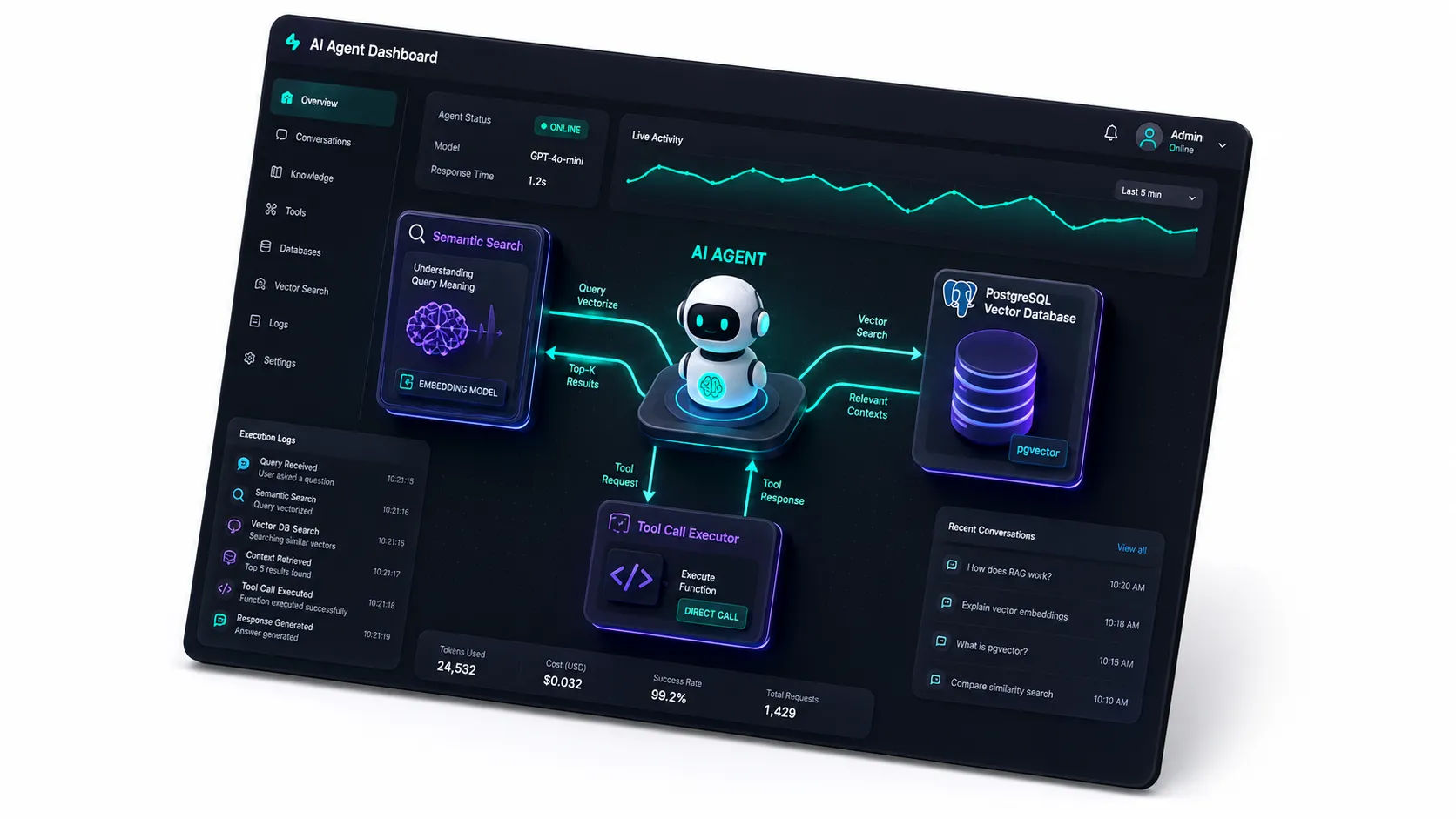
The real digital transformation happening right now centers on Agentic AI. Instead of waiting for a user to type a question, an agentic system breaks down complex business goals into independent sub-tasks, validates its own output, uses external APIs to fetch real-time data, and executes full workflows autonomously.
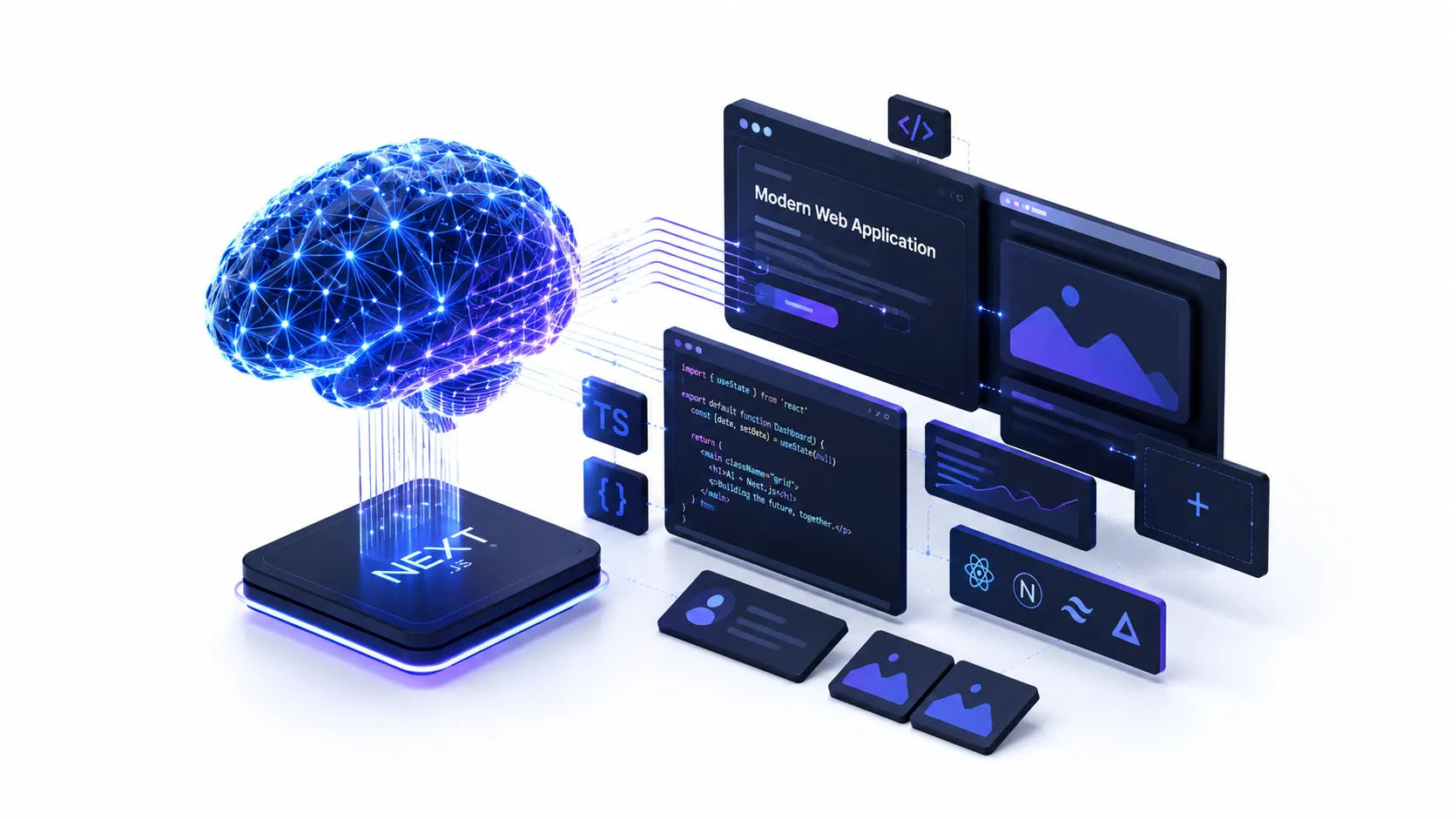
For full-stack developers and tech businesses, the ultimate environment for launching these intelligent workflows is Next.js 15. By pairing the native performance optimizations of Next.js with robust database patterns, you can build secure, resilient, self-running AI systems without spinning up complex, separate python microservices.
Let's explore how to architect an autonomous agentic system natively inside the Next.js App Router using Server Actions and background processes.
Why Next.js 15 is the Perfect Match for Agentic AI
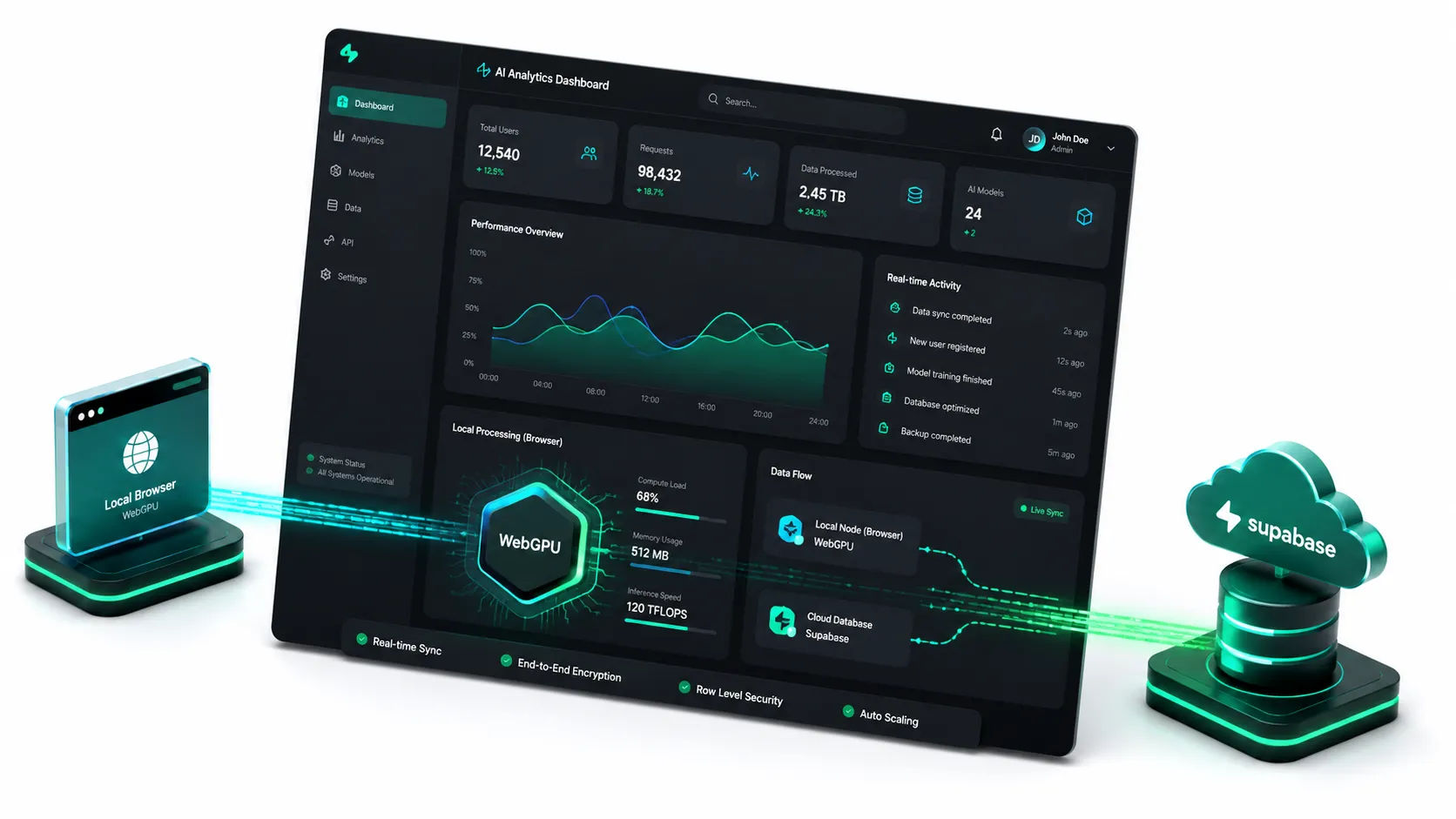
Building agentic workflows requires a framework that handles streaming data elegantly, secures sensitive API keys on the server side, and interacts instantly with a database to preserve agent state.
Historically, developers turned to separate Python environments to manage multi-step AI logic. However, maintaining dual codebases introduces network latency, deployment overhead, and complex authentication handshakes. Next.js 15 changes the calculus completely by offering a unified full-stack ecosystem.
1. Server Actions as Secure Execution Blocks
Agentic workflows require access to powerful external tools—payment gateways, CRM webhooks, and raw database access. Exposing these via traditional client-side fetching invites massive security vulnerabilities.
Next.js Server Actions act as secure, direct RPC channels. They run entirely on the server, keeping your underlying LLM API orchestration keys completely hidden from the browser.
2. Edge Execution and Streaming Resiliency
Agents take time to complete multi-step loops. They might generate an outline, review it for errors, rewrite a section, and then update a database record.
With Next.js Edge infrastructure, you can stream partial progress back to the user interface seamlessly. Using React Suspense and streaming architectures allows the frontend to stay highly interactive while the underlying backend loops execute complex reasoning trees.
The Core Architecture of an Agent Loop
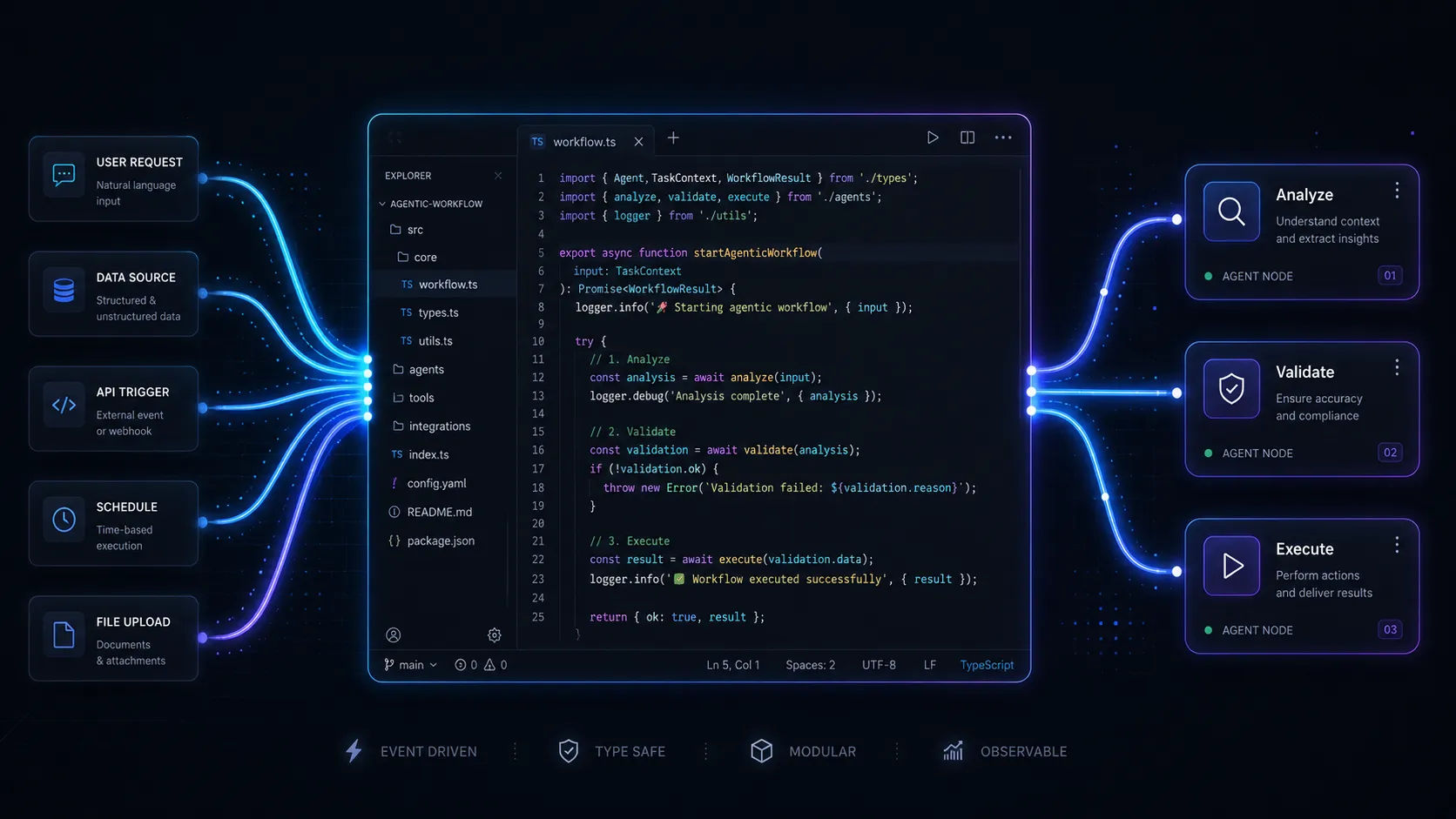
To build a true agent, you must shift your mindset from simple data fetching to a state-driven loop. A standard agent lifecycle consists of four continuous phases:
[Goal Received] ➔ [Plan Sub-tasks] ➔ [Execute Tools] ➔ [Self-Reflect/Verify] ➔ [Complete]
Planning: The AI breaks down a broad user objective into an array of concrete steps.
Tool Selection: The agent determines which custom functions it needs to execute (e.g., searching a database, generating a PDF, or calculating financial figures).
Execution: The system runs the required codeblocks or third-party integrations.
Self-Reflection: The agent analyzes the result of its own action. If it encounters an error or notices missing data, it reframes the prompt and reruns the tool autonomously.
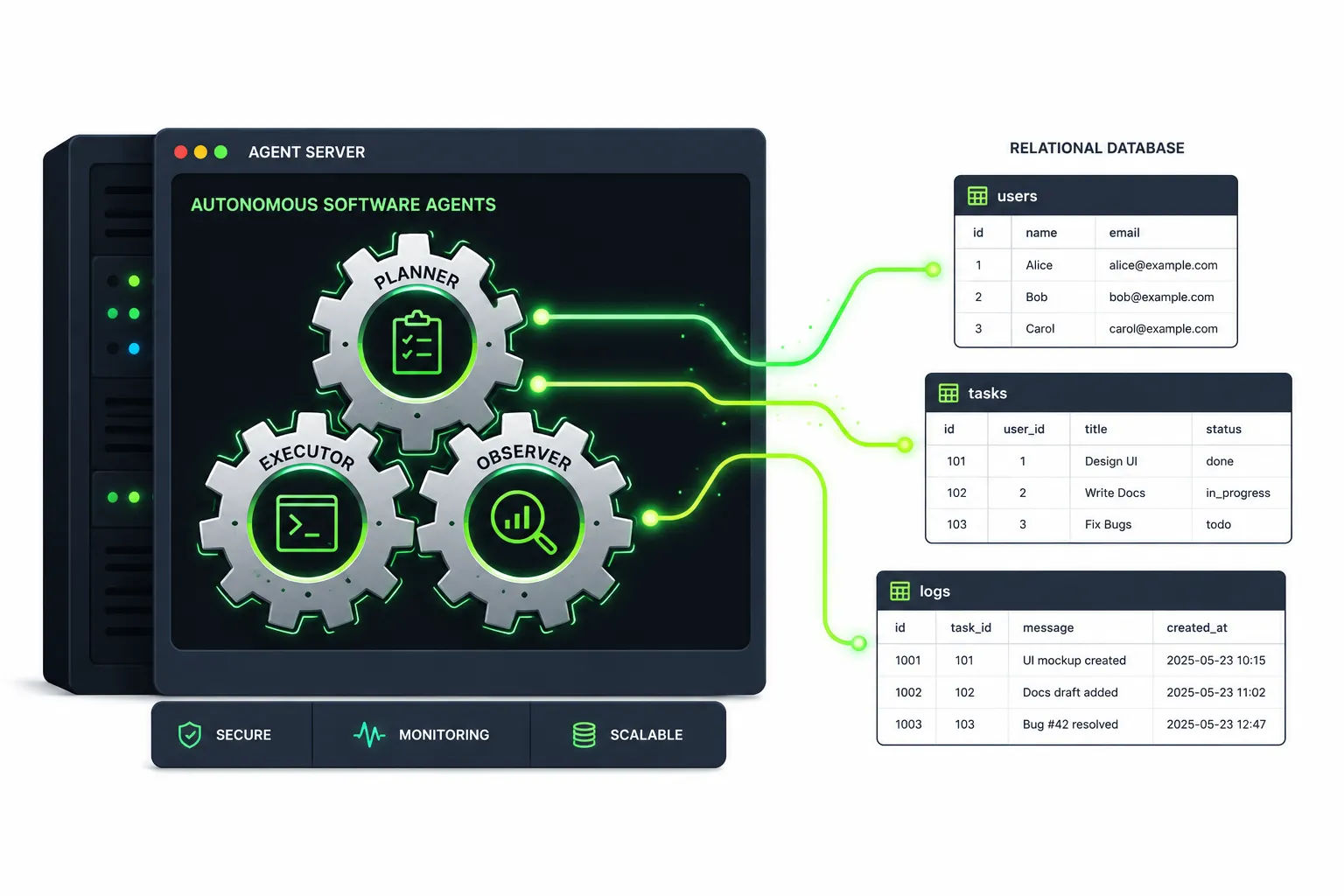
To build sustainable digital systems, keeping track of these multi-step loops in a persistent database is non-negotiable.
Step-by-Step Implementation: Building a Self-Correcting Content Agent
Let’s look at a real-world scenario: An automated system designed to research a technical topic, check the data for structural validity, and draft a verified update directly into a database schema.