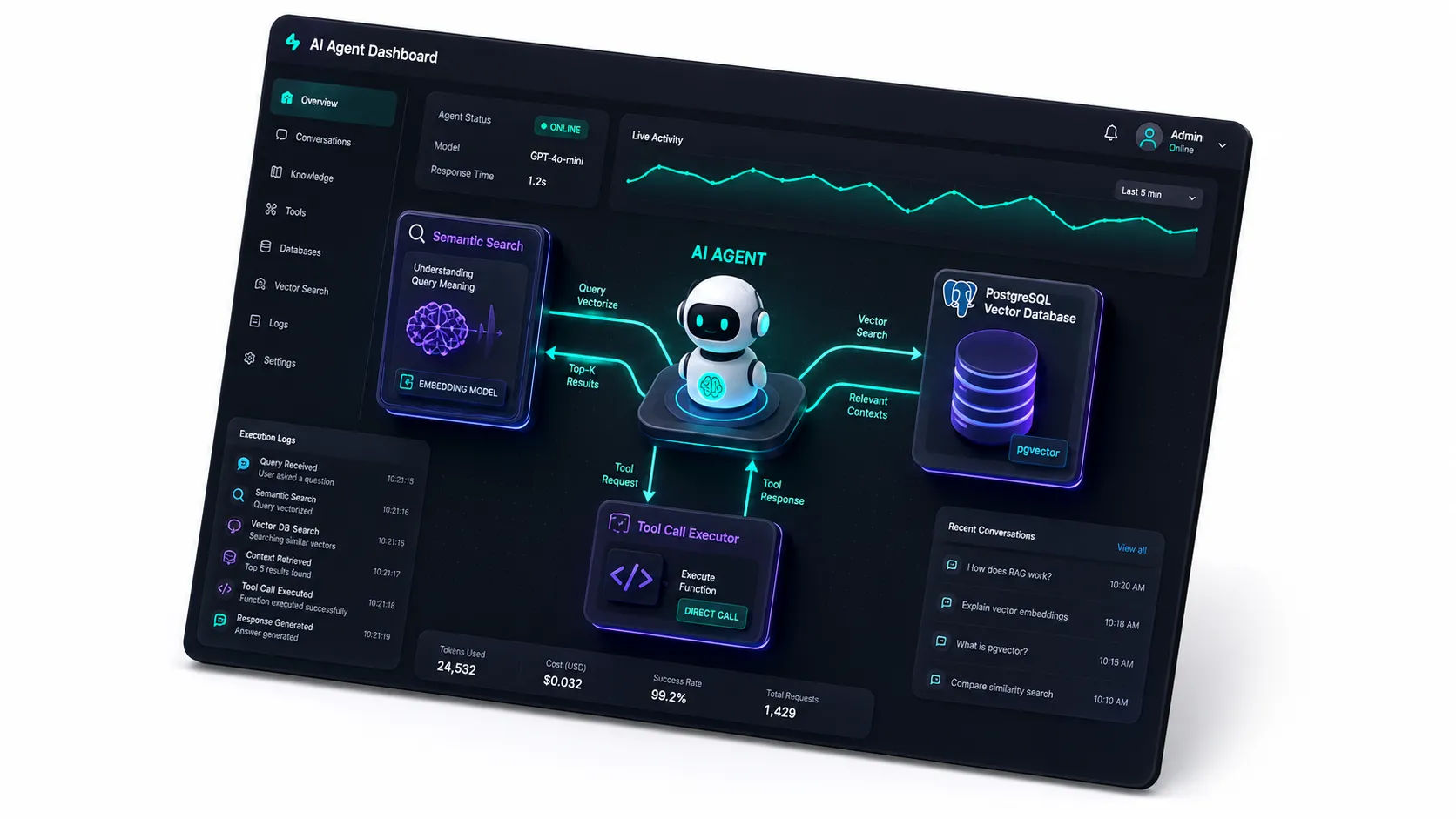
How to Build Agentic RAG Workflows with Next.js 15 & Prisma
How to Build Agentic RAG Workflows Using Next.js 15 Server Actions
The era of the simple, static AI chatbot is officially over.
Over the last few years, the standard Retrieval-Augmented Generation ($RAG$) pipeline became the default blueprint for business intelligence. You took some data, chopped it into chunks, turned them into vector embeddings, threw them into a vector database, and let an LLM read them to answer questions. It worked, but it was fundamentally passive. The AI could only fetch data and talk about it; it couldn’t do anything.
In 2026, the industry is shifting rapidly toward Agentic RAG.
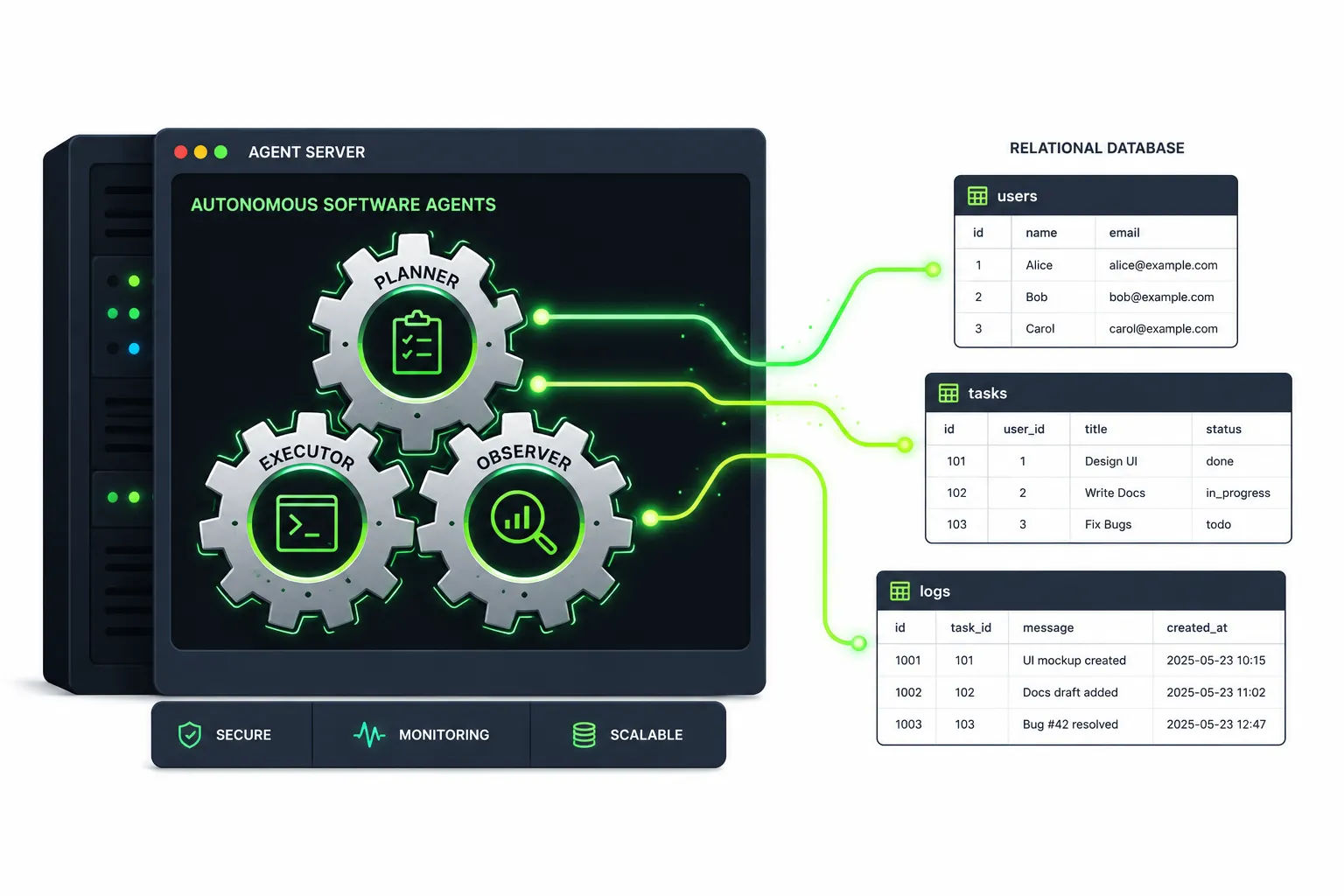
An Agentic RAG workflow doesn’t just perform a single vector search and summarize the text. It uses an autonomous AI agent that evaluates the user's intent, decides which tools or databases to query, checks the quality of retrieved data, rewrites its own search queries if the results are poor, and handles full-stack mutations.
The best part? You don't need a heavy, complex Python backend framework like LangChain or CrewAI to build this anymore. By leveraging Next.js 15 Server Actions as functional tools, you can architect production-grade, secure, and blazing-fast Agentic AI workflows entirely within a unified TypeScript ecosystem.
1. Passive RAG vs. Agentic RAG: The Structural Evolution
To understand why Agentic workflows are transforming enterprise technology, we have to look at how they handle user requests compared to traditional pipelines.
In a passive pipeline, the system follows a linear path: User Query $\rightarrow$ Vector Search $\rightarrow$ LLM Context $\rightarrow$ Text Response. If the user asks, "How many new users signed up yesterday, and can you email a summary to the admin?", a passive system breaks down. It might pull documentation on how to sign up, but it cannot run a query or trigger an email.
An Agentic system introduces a Reasoning Loop (often following patterns like ReAct: Reason + Action). The agent looks at the user request and thinks:
I need to fetch yesterday's signup count. Let me call the
getUserAnalyticstool.The tool returned 142 signups.
Now I need to send the email. Let me trigger the
sendAdminSummaryEmailtool.Both actions succeeded. I will now inform the user.
By using Next.js 15 Server Actions as the implementation layer, these "tools" become secure, server-side functions that run directly next to your database singletons.
2. Server Actions as the Ultimate AI Toolbelt
One of the biggest security nightmares of building AI agents is preventing them from executing malicious actions or exposing environment variables to the frontend.
Next.js 15 Server Actions completely solve this problem by introducing a secure runtime boundary. When you define a Server Action with the 'use server' directive, the code is heavily isolated. The client-side code only receives a secure, encrypted RPC (Remote Procedure Call) endpoint stub. The AI model runs on the server, reads your database securely via Prisma, and executes native code without ever exposing secrets to the user's browser.