The Psychology of Agentic AI: Redefining 2026 Business Technology
The Psychology of Autonomy: Why Agentic AI Is Redefining 2026 Business Technology (And Why Humans Are Resisting It)
In the opening months of 2026, the global technology conversation quietly underwent a massive architectural shift. For the past three years, the corporate world was obsessed with Generative AI—chatboxes, prompt engineering, and static text generation. It was a world of "human-pull" technology where an individual had to manually type a prompt, wait for a response, copy it, and paste it into their workflow.
But as we hit mid-2026, that era is officially over.
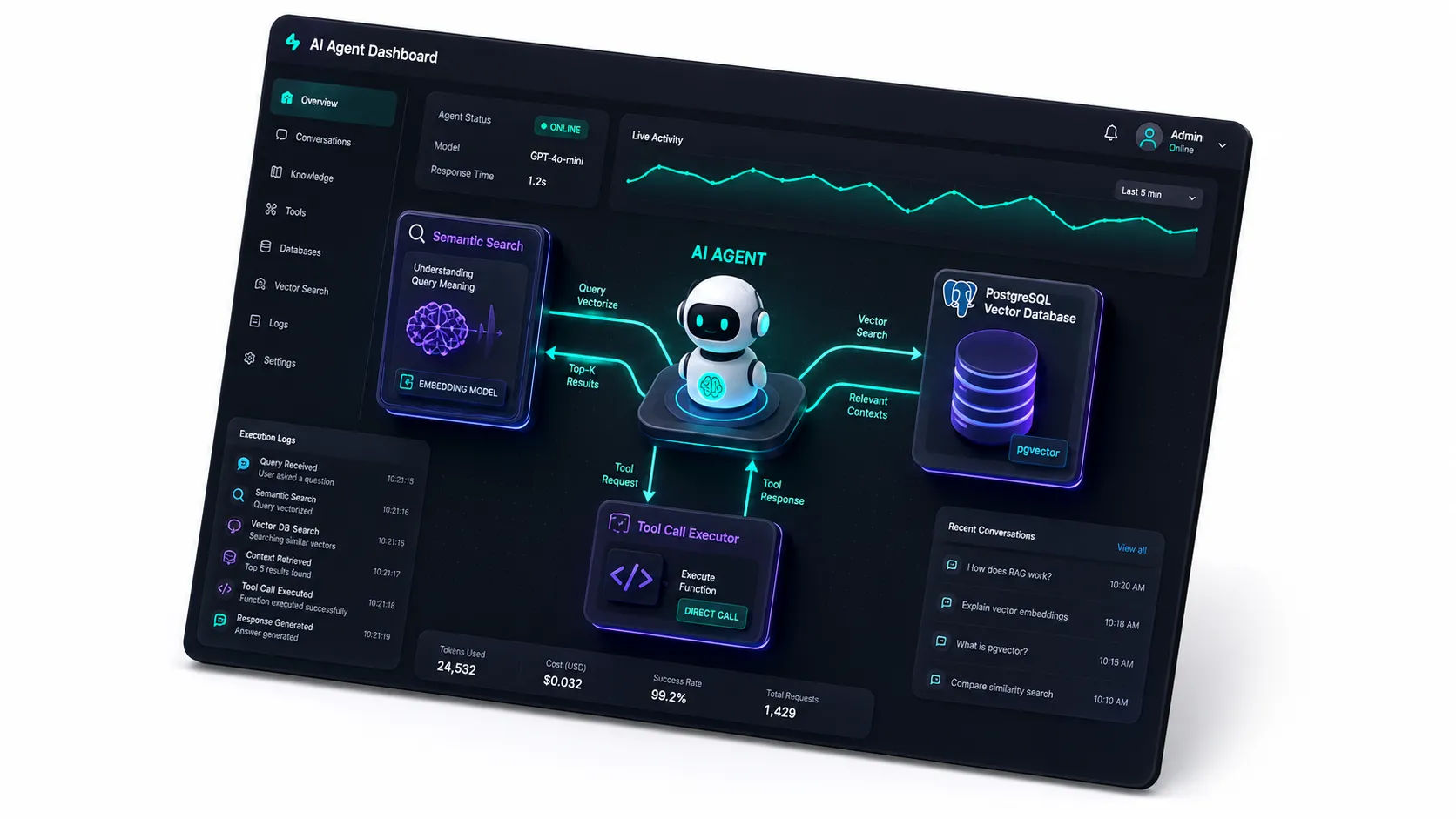
The dominant macro-trend dominating the tech industry today is Agentic AI—autonomous systems built on multi-agent frameworks that don’t wait for prompts. Instead, they operate on intent. They observe databases, monitor system logs, trigger API hooks, manage workflows, and collaborate with other AI systems to solve complex end-to-end business problems without constant human hand-holding.
Yet, as businesses rush to implement this hyper-efficient architecture, they are running headfirst into an unexpected roadblock: human psychology. While the code for these systems is ready, human behavior—rooted in a deep-seated need for control, predictability, and safety—is pushing back.
Understanding this psychological friction is the absolute key to building, selling, and deploying successful tech products in 2026. If you want to know how we got here, check out our insights on why I built my professional blog with a custom stack in 2026 to see how clean architecture sets the stage for advanced integration.
1. Defining the 2026 Tech Frontier: What is Agentic AI?
Before diving into human behavior, we must clarify the structural shift occurring in software architecture. In traditional web platforms, automation was programmatic and brittle. If a user abandoned a checkout cart, an IF/THEN statement triggered a standard email.
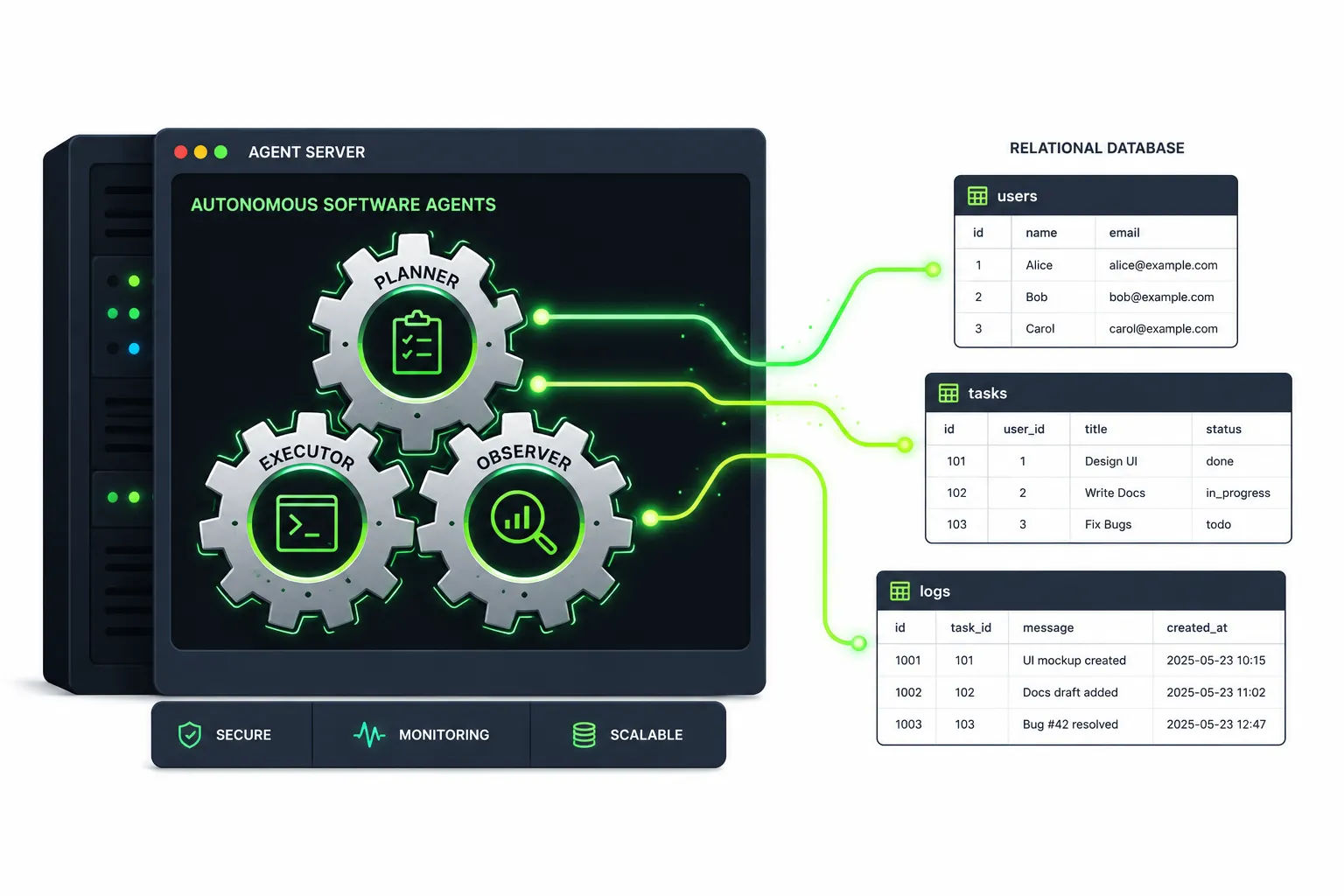
In contrast, an Agentic AI infrastructure operates as a decentralized network of specialized intelligences. For instance, in a modern multi-tenant enterprise system, you might have:
The Analyser Agent: Permanently tracks user behavioral data patterns, detecting drops in engagement or anomalies in database reads.
The Orchestrator Agent: Interprets the problem, allocates resources, and assigns tasks to sub-agents.
The Action Agent: Writes personalized UI modifications, interacts with payment gateways, or constructs custom data payloads via Server Actions.
This shift moves software from a passive tool to an active digital coworker. Building such complex systems requires a rock-solid data foundation. If you are starting fresh, reading about why PostgreSQL with Prisma is the ultimate choice will show you how to structure data for these demanding agents.
2. The Illusion of Control: The Primary Psychological Barrier
The greatest hurdle to adopting autonomous tech isn't server latency or token costs—it’s the illusion of control. Human beings are evolutionarily wired to minimize uncertainty. For centuries, our relationship with machinery has been strictly transactional: I turn the steering wheel, the car moves left.
When a developer deploys an Agentic AI system that autonomously alters application state, optimizes Prisma queries, or modifies marketing spend based on real-time edge analytics, that predictable link breaks.
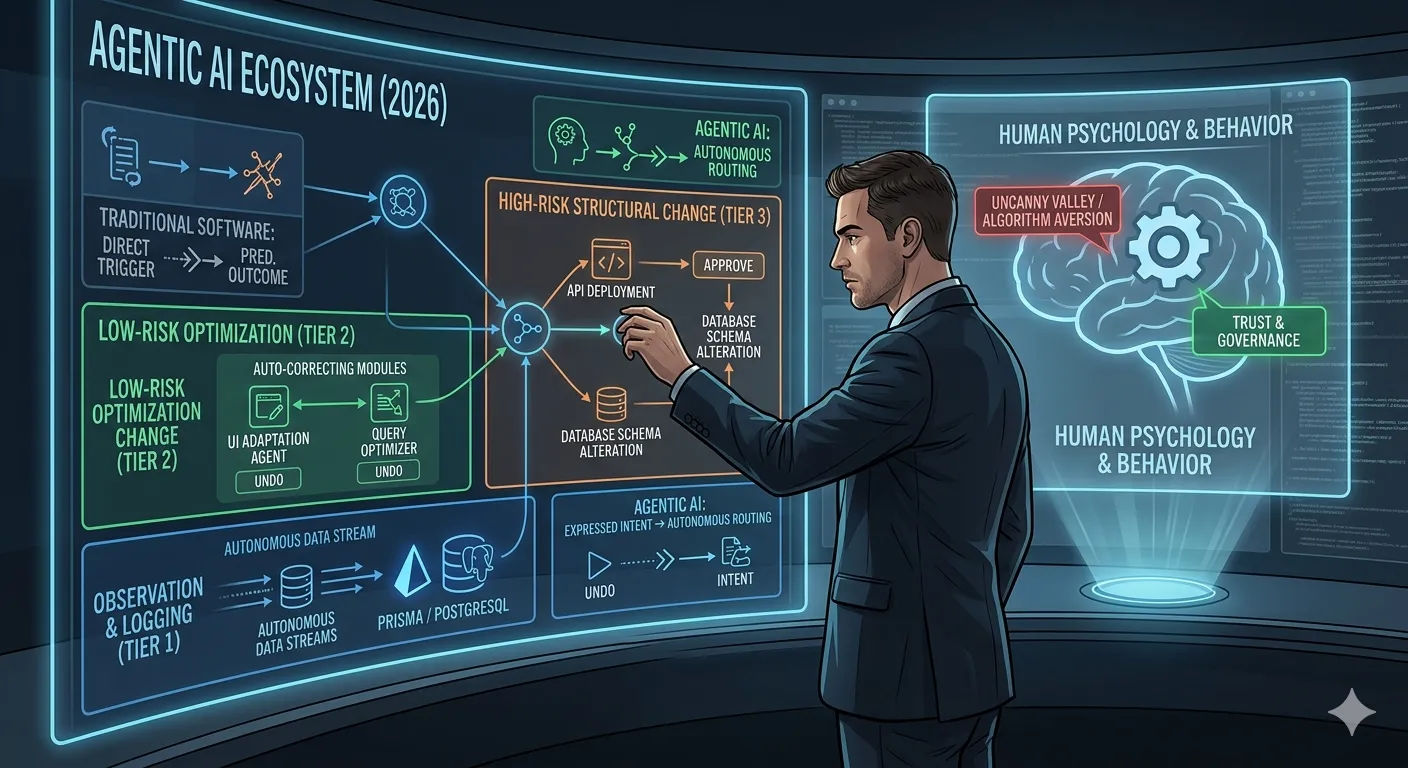
[Traditional Software] ===> Direct Trigger ===> Predictable Outcome (High Control)
[Agentic AI Systems]   ===> Expressed Intent ===> Autonomous Routing (High Uncertainty)
Psychologists call this "Algorithm Aversion." Even when data proves that an autonomous agent can route tickets or manage supply chains with 40% greater efficiency than a human operator, managers experience intense anxiety over losing the step-by-step visibility of the execution.
To overcome this, next-generation platforms must design "Cognitive Guardrails." Instead of building entirely invisible black-box agents, developers must build transparency interfaces. This means creating real-time visual streams showing what an agent is "thinking," why it made a specific choice, and allowing a human-in-the-loop validation point before high-risk actions are committed to the main database.
Proper indexation and mapping are critical for these workflows, which is why mastering how to build an automatic SEO sitemap in Next.js 15 with Prisma helps ensure that your system assets remain transparent to both search engines and AI parsers.
3. The Shift from "Writing Code" to "Orchestrating Intent"
For software engineers and tech professionals, Agentic AI alters the foundational psychology of their daily work. For decades, a developer’s self-worth and identity were deeply tied to the physical act of writing lines of code, managing syntax, and debugging stack traces.
In 2026, AI is rapidly eating traditional software lifecycles. The developer's role is shifting from a code construction worker to an architect of intent.
Instead of manually writing complex, multi-layered conditional logic for a web app, a developer defines the target system boundaries, establishes the database constraints via frameworks like Prisma, configures secure Edge execution environments, and allows specialized code-generation agents to orchestrate the micro-services.
This causes a profound identity crisis within tech teams. "If the machine writes the code, what am I?" The answer lies in mastering system composition and governance. Many engineers feel stuck during this transition; reviewing the typical how-to intent that most developers search for when they are stuck reveals that clarity in intent mapping is what separates juniors from architectural experts.
The successful tech businesses of 2026 are those that help their human staff transition emotionally and intellectually from coders to system orchestrators. This logic forms the core of our comprehensive ultimate web development roadmap for 2026.
4. Hyper-Personalization and the Paradox of Predictive Tech
On the consumer side, the convergence of high-performance web frameworks (like Next.js 15) and localized Edge AI has birthed Hyper-Personalization. Web apps are no longer static templates pulled from a CDN; they are highly adaptive user interfaces that morph in real-time based on the user's cognitive state, past behavior, and immediate intent.
If a user visits an e-commerce platform while rushed (indicated by rapid scrolling, quick cursor adjustments, and abrupt clicks), an agentic UI simplifies the checkout layout, hides secondary banners, and surface 1-click buy buttons. If the user is browsing leisurely, the interface structurally shifts to surface long-form content, deep specifications, and community reviews. To make these fast dynamic transitions flawless, understanding the power of Next.js Server Components is absolutely mandatory for cutting down client-side overhead.
However, this level of predictive intelligence triggers a psychological phenomenon known as The Uncanny Valley of Personalization.
When an app anticipates a human need too perfectly, it ceases to feel helpful and begins to feel invasive. If an app recommends a solution before the user has consciously formulated the problem, it triggers privacy panic. Human behavior dictates that we love personalization, but we hate feeling monitored.
Tech businesses must learn the art of Subtle Contextualization. The personalization must feel like serendipitous discovery rather than aggressive surveillance.
5. Overcoming Friction: The "Human-Agent Team" Blueprint
To build business software that humans will actually embrace in 2026, technology leaders must stop trying to replace human operators and focus entirely on creating Collaborative Human-Agent Frameworks.
This psychological alignment can be successfully executed by structuring systems into clear operational tiers:
Tier | System Level | Autonomy Scope | Human Psychological Role |
Tier 1 | Observation & Logging | 100% Autonomous | Passive Consumer (Zero anxiety, low friction) |
Tier 2 | Low-Risk Optimization | Autonomous Action with Undo | Approver / Overseer (High sense of safety) |
Tier 3 | High-Risk Structural Change | Proposal Only (Requires Human Sign-off) | Final Decision Maker (Preserves ultimate control) |
By segmenting system tasks this way, you respect human emotional boundaries while maximizing silicon processing speeds. The agent handles the exhausting, high-volume computational heavy lifting, while the human retains the final creative and ethical veto power.
If you want to create highly interactive administrative portals to visually manage these specific tiers, you can leverage ready-to-use layouts like our 1-click prompts for contact-message dashboards using Tailwind CSS to deploy clean oversight consoles instantly.
Conclusion: The Ultimate Tech Competitive Advantage in 2026
The true winners of the 2026 technology landscape will not be the companies with the largest LLM clusters or the cheapest cloud computing rates. The ultimate competitive advantage belongs to the product designers, full-stack engineers, and business leaders who understand the intersection of advanced algorithms and human emotion.
Technology provides the speed, but human psychology dictates adoption. By building highly scalable, performant web applications that treat user data with absolute zero-trust security while exposing beautifully clear, transparent, and manageable interfaces, you bridge the gap between machine capability and human trust.
For developers trying to balance intense manual labor with strategic digital expansion, managing this mental overhead is a unique skill set. You can explore a personal perspective on this balancing act in our detailed guide on how I manage 10 hours of labor and 4 hours of coding every day.
As software becomes self-assembling, self-optimizing, and fully agentic, your success depends entirely on one simple truth: Master the system architecture, but always design for the human mind.