Cracking the Code: Next.js Performance Secrets for Dynamic, AI-Powered Experiences
Cracking the Code: Next.js Performance Secrets for Dynamic, AI-Powered Experiences
In the rapidly evolving landscape of web development, user expectations for speed, responsiveness, and dynamic content have never been higher. For Next.js applications, especially those integrating AI-driven features or serving highly personalized experiences, performance isn't just a nice-to-have – it's a critical differentiator. As a sharp editor, I've seen countless sites struggle with sluggishness despite robust features. The truth is, building a feature-rich Next.js app that also feels instantaneous requires a deliberate, strategic approach to optimization.
This isn't about chasing every micro-optimization, but rather understanding the core principles that dictate your application's speed and how to apply them effectively. Let's dive into the practical strategies that will help your Next.js site not just perform, but truly fly.
Beyond the Basics: Strategic Rendering Choices
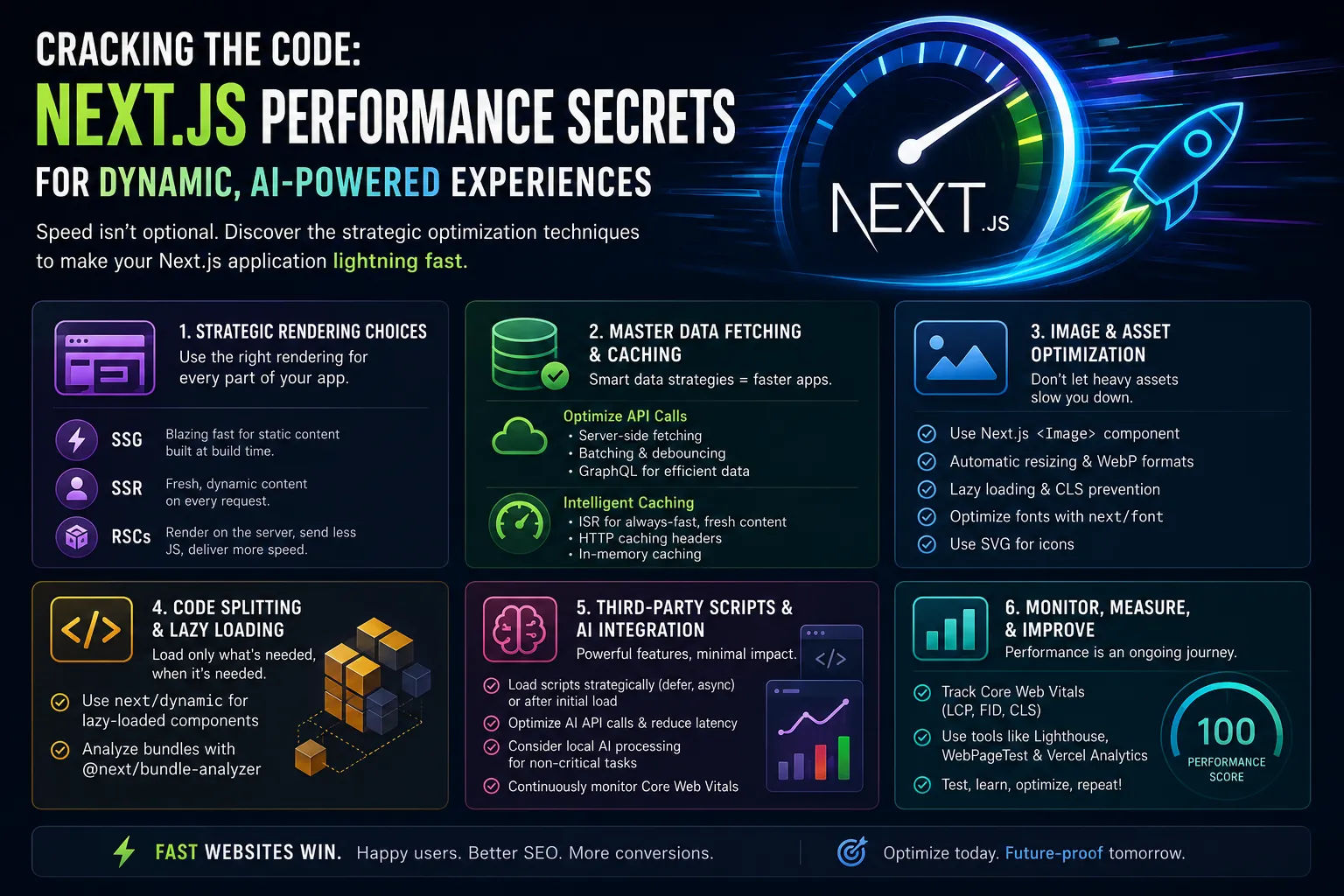
Next.js offers a powerful spectrum of rendering options, and choosing the right one for each part of your application is foundational to performance. While Static Site Generation (SSG) delivers unparalleled speed for static content, dynamic features and AI integrations often demand Server-Side Rendering (SSR) or the nuanced power of React Server Components (RSCs).
- Static Site Generation (SSG): Ideal for content that doesn't change frequently. Pages are built at build time and served as static HTML files, offering incredible speed and resilience. Think blog posts (like this one!) or product landing pages.
- Server-Side Rendering (SSR): Perfect for highly dynamic, user-specific content that needs to be fresh on every request. While it adds a slight overhead compared to SSG, SSR ensures users always see the most up-to-date information without client-side data fetching delays.
- React Server Components (RSCs): This is where modern Next.js truly shines for dynamic applications. RSCs allow you to render components directly on the server, fetching data and even interacting with databases before sending minimal HTML and JavaScript to the client. This significantly reduces client-side bundle sizes and improves initial page load times, especially for complex UIs that need to fetch a lot of data. For a deeper dive into how RSCs transform dynamic experiences, check out our post on Beyond Static: Next.js Server Components and AI for Dynamic Experiences.
The key is to use a hybrid approach. Don't SSR everything just because you have some dynamic elements. Identify which parts of your page truly need real-time data or AI processing, and apply the most efficient rendering strategy accordingly.
Mastering Data Fetching and Caching
Inefficient data fetching is a silent killer of performance. When your Next.js application relies on external APIs or databases, how and when you retrieve that data is paramount.